
6-9 Month Old Baby Food Puree Menu (FREE Printable)
 by Michele Olivier (last updated Jun 22, 2026)
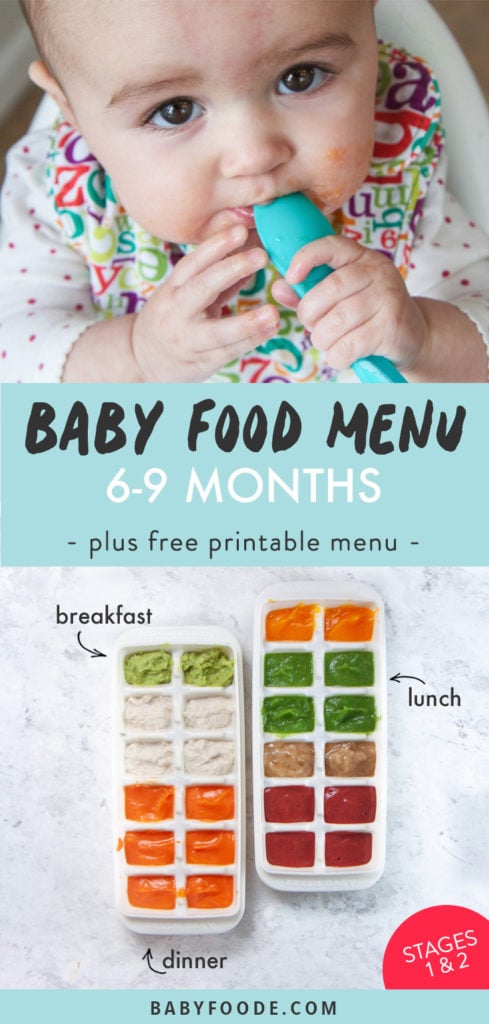
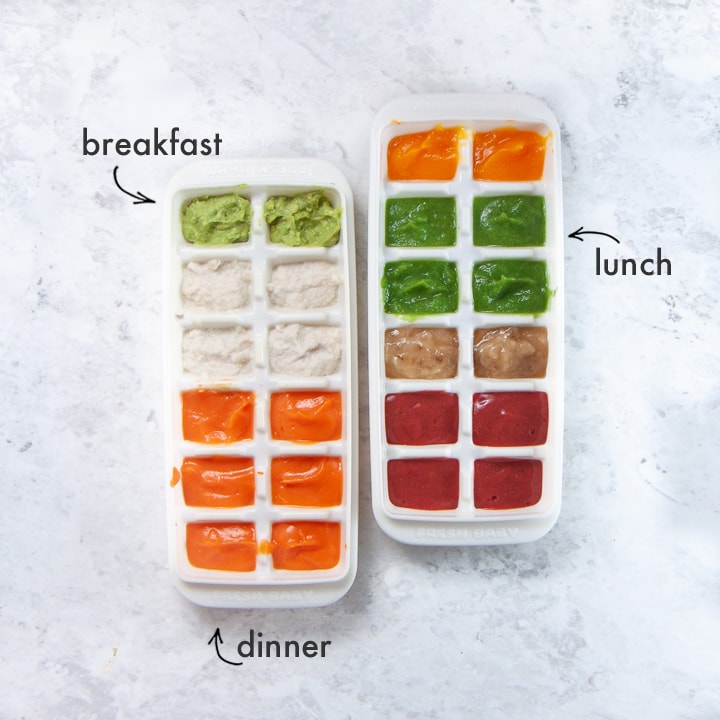
This 6-9 Month Baby Food Menu brings new and exciting ideas to the table — literally! Know what to feed your baby for breakfast, lunch, and dinner using Stage 1 and Stage 2 baby foods. Plus, there is a free printable menu that you can use to map out your baby’s meals for the entire week!
Are you looking to plan your baby’s meals out for the week?
Then, I’ve got you!
This easy-to-use meal plan guide featuring Stage 1 and Stage 2 Baby Food purees has month-to-month meal suggestions for your baby’s breakfast, lunch, and dinner.
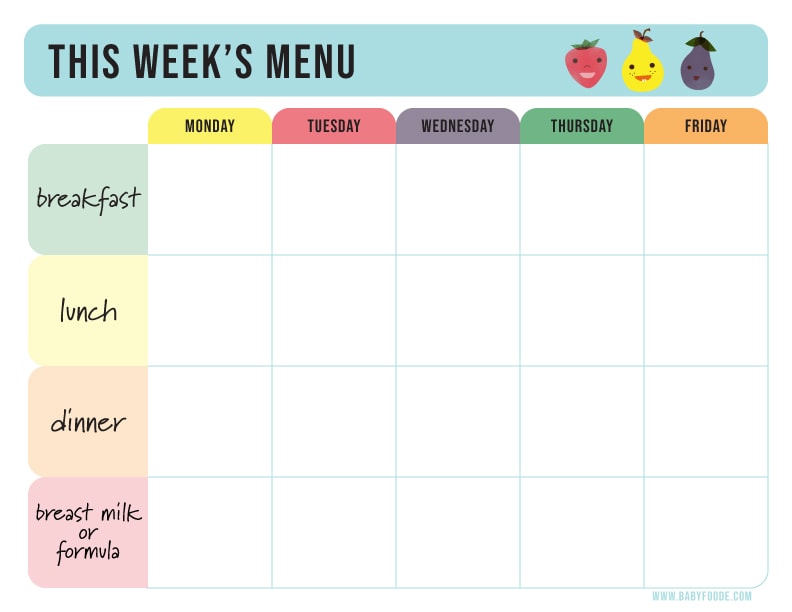
I even included a free printable for you to print and fill out with what your baby will eat at each meal. It’s a convenient tool for use at home or to be sent to your daycare, grandparents, or caregiver’s house.
How to Make Baby Food
6-Month Menu Options
At 6 months old, your baby should be getting 2-4 tablespoons (1-2 ounces) of solids twice a day. But, again, do not be discouraged if your baby is not eating this much at each feeding. Solids are just for fun at this point!
Breakfast
- Apple Puree
- Baby Oatmeal Cereal with Omega-3s + Antioxidants
- Avocado + Banana Puree
- Pear Puree
- Full Fat Plain Yogurt
Lunch
Dinner
7-Month Menu Options
At 7 months, your baby’s expanded palate can probably tolerate thicker purees compared to last month. However, they should still be getting the majority of their calories from breastmilk or formula.
Breakfast
- Roasted Banana + Cinnamon Puree
- Apple, Raspberry + Vanilla Puree
- Banana, Blueberry + Avocado Puree
- Full Fat Plain Yogurt mixed with Banana, Cherry + Beet Puree
- Spinach Avocado Oatmeal Breakfast Cereal
Lunch
- Spinach + Apple Puree
- Blackberry + Kale + Apple Puree
- Sweet Corn, Squash + Apple Puree
- Blueberry Chickpea with Rosemary Puree
- Green Pea Hummus for Baby
Dinner
9-Month Menu Options
At 9 months, your baby should be extremely comfortable with stage 2 purees and may start transitioning to stage 3 purees, which have soft chunks that babies can easily chew. By now, your baby should be eating from all of the food groups with 3 meals and 1-2 snacks a day, along with breastmilk or formula.
Breakfast
- Strawberry Quinoa Breakfast Cereal
- Blueberry Oatmeal for Baby
- Apple + Mint with Cottage Cheese
- Cherry, Banana + Raspberry Puree
- Spiced Pear Oat Puree
Lunch
- Sweet Potato, Carrot, Cauliflower Puree with Chia Seeds
- Carrot, Corn + Pumpkin Puree
- Apple, Spinach + Pea Puree
- Superpower Green Puree
- Thai Chicken Puree with Mango
Dinner
Feeding Tips
- 2-3 Meals a Day – Aim to serve your baby 2 to 3 meals a day, and then add 2 more meals as your baby gets more comfortable with the eating process.
- Start with a Small Portion – Start by feeding your baby 1-2 ounces of a puree, and if they want more food, then, by all means, offer them more. However, if they turn their heads or clamp their mouths shut, take the food away and try again later.
- Pick the Right Time – You don’t want to try out new food or have mealtime when your baby is hungry. It’s best to feed your baby solid foods when they already had a little breastmilk or formula in their tummies but not when they’re too full either.
- Exposure – It may take your baby up to 10 times of trying a certain recipe to decide if they like it or not. So remember to keep offering them that particular kind of food, even if they push it away the first 9 times you offer it.
- Be Patient – Some days your baby might eat everything you put in front of them, and other days, they might refuse to open their mouths. As challenging as it may be, you just have to increase your patience with them and follow their lead. Remember that each time you sit down for a meal together is a chance to work on new skills — how to sit on a high chair, hold (and drop) a spoon, reach out, grab a sippy cup, etc. So nothing is lost even if they don’t eat a single bite of food; they are still learning.
Medically reviewed and co-written by Jamie Johnson, Registered Dietitian Nutritionist (RDN), and Lauren Braaten, Pediatric Occupational Therapist (OT).

15 Comments on “6-9 Month Old Baby Food Puree Menu (FREE Printable)”
🥰🥰🥰
So helping .keep itup guys
I am a dietitian and even with all the knowledge, I still love your recipes and use then and recommend them to other Mum’s. Thank you – all the way from Darwin, Australia!
So glad you are here and enjoying the content! Thanks for sharing with your friends:)
Hi Elleni,
I’m also a dietitian, love several of these recipes but concerned with providing fruit so often! How did you balance keeping your child interested and not overdoing sweet puree with every meal?
You can adjust the fruit to veggie ratio in any of these recipes as you see fit.
I love all the resources you provide! Such a helpful tool for me as a new mom! My daughter is 4 months old, so I still have some time (maybe!) before solids but I like to have things organized first! 😊
I was wondering how to first introduce solids to her? You mentioned that this schedule is good once baby has tried some foods, but how do I make a “schedule” for the first times? Do I just pick a food and start with that only that food twice a day? For example, offer sweet potato for breakfast and dinner for like x days? Or do I try a different food every day? For example, offer sweet potato Monday and then peas Tuesday, and so on. And do I just offer one food at eat “meal”? I want her to be exposed to many different foods but don’t want to overwhelm her (or myself!).
Thanks in advance!
These are all great questions! I am just like you and planned for months what my baby would eat! Give this Ultimate Guide a read and let me know if it doesn’t answer all of your questions. Heads up – it’s a long read so grab a coffee (or glass of wine;).
Hello.
I love your content ! I wanted to know were the food in which you put at certain months specifically suppose to start during those months or can we introduce them as we please?
Hi fell in love with your baby food recipes..Tried most of them.
But at the moment am struggling with my 6 month old baby taking his formulae milk.He wouldnt drink it no matter the different ways I tried..He was exclusively breastfed and I feel it’s high time he takes he start taking his formulae milk because the breast milk is not much and not flowing much to meet his demands..Pls help I want him start drinking his milk more in addition to his solids..thanks
So happy to hear you like (and have tried) the baby food recipes. I am not a lactation consultant, but I know when we switched from breastmilk to formula I had to wean my babies onto it by starting with a bottle of 3/4 breastmilk and 1/4 formula and then over the next couple of weeks reducing that even further down until it was just formula. Breastmilk and formula taste very different so I think that sometimes this difference is just a little too intense for some babies. Hope that helps!
I fell in love with your blog! So helpful!
Do you recommend having a different meal for b/l/d each day of the week, even if it’s their first time trying a certain combination? Or sticking with the same foods for several days before jumping into something else?
To start I would serve the same food several times and then try a new food. This meal plan would be great used after your little one has tried several different foods.
Hello! I want to start by saying I love your recipes, but I’m struggling with my son. He is almost 10 months old and won’t eat ANY baby food. He watches me eat, wants to eat, but when I try to give him food he will shut his lips and make a gross face. What am I doing wrong???
Any advice would be greatly appreciated!
Oh no, that sounds stressful! It sounds as if he isn’t hungry when you try meals. I would start by making sure he didn’t have a bottle and isn’t full right before you try to feed him a meal. You don’t want him starving or full when starting solids. Try serving him half of your normal amount of breast milk or formula, trying some food (purees or finger foods) and if he is still hungry offering him the rest of the serving of breast milk or formula. You can also wait 1-2 hours after a feeding to serve him a meal. See how that goes and let me know if he still isn’t eating. Hang in there!